How to keep score at Gin Rummy
Keep score for Gin Rummy played with a real pack. Tap whoever knocked and write in the two deadwood counts, the other player’s after laying off, and the scorekeeper scores the knock, the gin or the undercut.
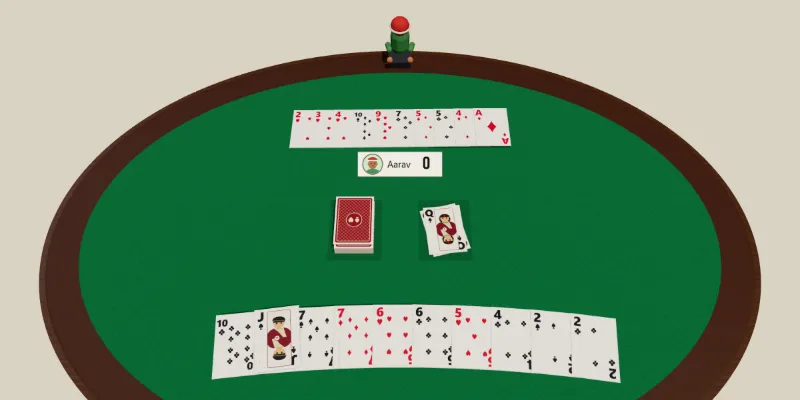
- Players
- 2
- What you need
- A pack of cards and this phone
- How long
- To 100 points
What it is for
In Gin Rummy whoever knocks scores the difference between the two deadwood counts. If the other player has as little or less, it is an undercut and they score instead, with a bonus. Going gin, with no deadwood at all, scores the other player’s whole deadwood and a bonus, and cannot be undercut.
It needs no account and no signal. The score is kept on this phone, so it survives the screen going dark between deals, and the page opens again where you left it.
Setting the table
- Write in everybody’s name in the order you sit, going the way the deal passes.
- Tap Deals beside whoever deals first, or press Pick a dealer and let the phone choose.
- Set the house rules your table plays, then press Start. The phone remembers the names and the rules for next time.
Two names. The scorekeeper says whose deal it is, turn and turn about.
After each deal
Tap the crown beside whoever knocked, and write in both deadwood counts: the knocker’s as it stood, the other player’s after laying off onto the knocker’s melds.
If the stock ran down with nobody knocking, tick Dead hand, which scores nothing.
How the score is worked out
A knock scores the difference. An undercut scores the difference the other way, plus the undercut bonus. Gin scores the other player’s deadwood plus the gin bonus.
Only one player scores a hand, and the first to the target wins.
The arithmetic is the code the Gin Rummy tables in this app score with, so the scorekeeper and the game always agree.
House rules
- Play to
- A hundred is usual. Fifty is quick, a hundred and fifty long.
- Gin bonus
- Twenty-five is usual. Some tables give twenty.
- Undercut bonus
- Twenty-five is usual. Some tables give ten or twenty.
Who deals, and where to sit
Pick a dealer chooses who deals first, and from then on the scorekeeper says whose deal it is above every deal. Shuffle seats puts the names in a new order to sit in.
Both draw from the phone’s own random number generator, the one the dice roller uses, so every seat is equally likely.
This is a scorekeeper for a game played with real cards, so there is nothing to set up and nothing to sign in to.