How to keep score at Dehla Pakad
Keep score for Dehla Pakad (Mendikot) played with a real pack, two against two. Say how many of the four tens one side took, and the scorekeeper decides the hand, counts the streak and the kots, and says who deals next.
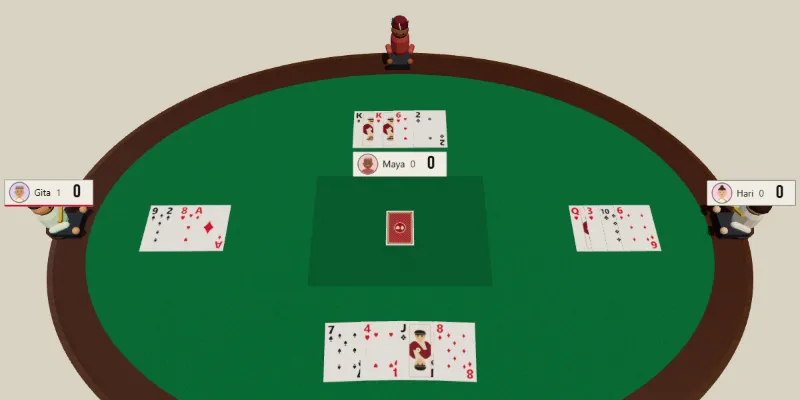
- Players
- 4, in two partnerships
- What you need
- A pack of cards and this phone
- How long
- To two kots
What it is for
Dehla Pakad is played for the tens. The dealing side needs three of the four to take the hand, and the other side takes it with two. A kot is all four tens, or seven hands in a row. Whose deal it is next depends on who won and how, which is the part tables argue about.
It needs no account and no signal. The score is kept on this phone, so it survives the screen going dark between deals, and the page opens again where you left it.
Setting the table
- Write in the four names in the order you sit. Partners sit opposite, so the first and the third are one side and the second and the fourth the other.
- Tap Deals beside whoever deals first, or press Pick a dealer and let the phone choose.
- Set the house rules your table plays, then press Start. The phone remembers the names and the rules for next time.
Partners sit opposite. Write the names in the order you sit, and the first and third names are one side.
After each deal
Above every hand the scorekeeper says which side dealt and how long a streak is running.
When the hand is over, say how many tens the first side took. The other side has the rest.
How the score is worked out
The dealing side takes the hand with three tens or four. Two each goes to the other side. All four tens is a kot at once, and so is a seventh hand in a row.
The deal stays with the dealer when the other side wins with two or three tens, passes to the dealer’s partner when the other side takes all four, and moves on when the dealing side wins. The first side to the kots it needs wins.
The arithmetic is the code the Dehla Pakad tables in this app score with, so the scorekeeper and the game always agree.
House rules
- Kots to win
- Two kots is usual. One makes a short game, three a long one.
Who deals, and where to sit
Pick a dealer chooses who deals first, and from then on the scorekeeper says whose deal it is above every deal. Draw partners shuffles the names, and partners are whoever ends up opposite each other.
Both draw from the phone’s own random number generator, the one the dice roller uses, so every seat is equally likely.
This is a scorekeeper for a game played with real cards, so there is nothing to set up and nothing to sign in to.