Traditional games of Nepal
These are the games Nepal has played for generations, on boards scratched into the ground, on cloths in courtyards and with shells and long dice at Tihar. Each has a page of what is known of its history, what is only said, and the sources, with links you can follow. The record is thin. Where nobody has written something down, the pages say so.
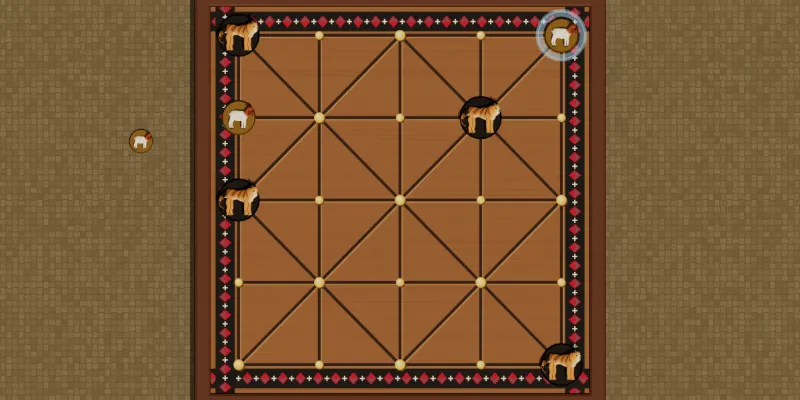
Why so little is written
Almost nothing about Nepal's games was written by the people who played them. The oldest descriptions are by outsiders: a history edited by the British Residency's surgeon in 1877, a visiting art historian in 1912, a zoologist's note on Indian games in 1933. The next layer is the Nepal Academy's dictionary, which records words like kauda's four daus and the cloth pachisi is played on, and then the newspapers, which mostly write about games when they are dying.
So each page here separates three things. What a source shows, with the source. What is repeated without one, such as Baghchal being a thousand years old. And what nobody has written down at all, which is where you come in.
The games, and their histories
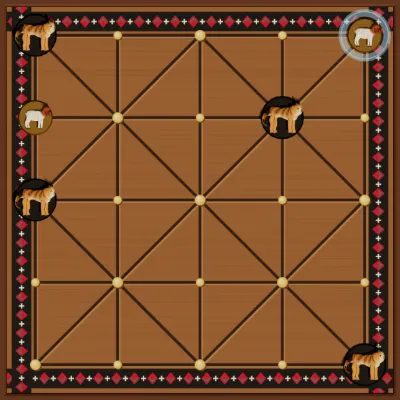 BaghchalFour tigers and twenty goats. Written down first in 1933, solved by a computer in 2009, and older than anybody can show.
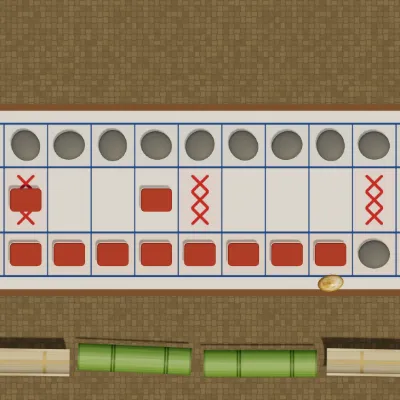 KasimalaA Newar game of armies, played by elders at temple rests in Bhaktapur. It nearly died out, and the town's schools brought it back.
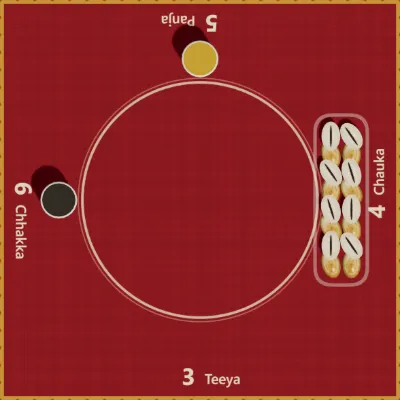 KaudaSixteen cowries on a courtyard mat. For a century the law itself let Nepal gamble on them for the five days of Tihar.
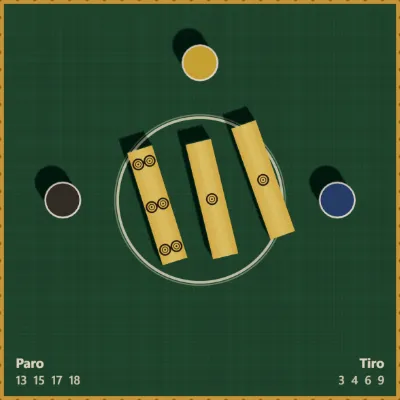 PasaThree long dice, thrown in villages at Dashain and Tihar. A Malla king threw them nightly with the goddess Taleju.
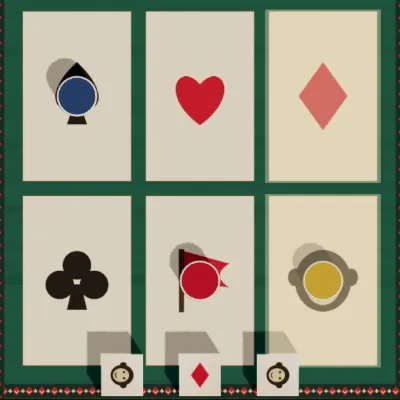 Langur BurjaCrown and Anchor, by its own name: langur is an old word for anchor and burja for a dome.
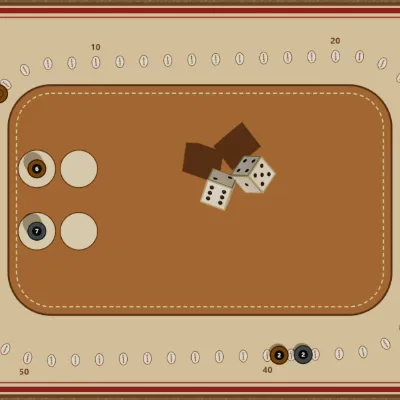 ShoTibet's national gambling game, thrown with a prayer on every throw. Photographed among the Sherpas in 1957.
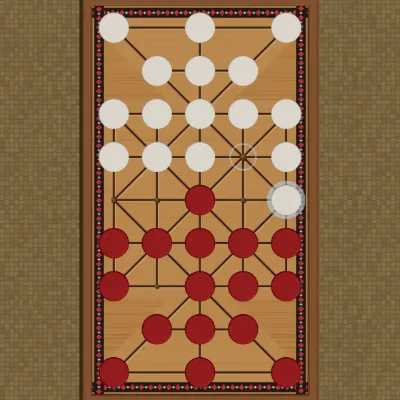 Sholo GutiSixteen soldiers a side, recorded in Ceylon and Bengal in 1909. Played on a board drawn in the dust, and never written about in Nepal.
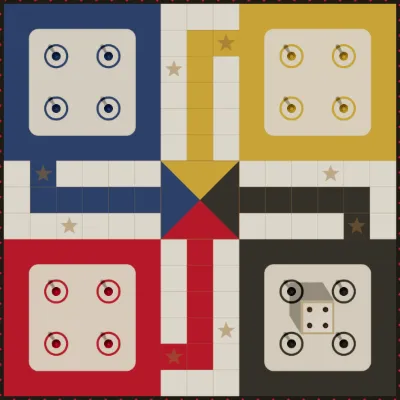 LudoPachisi on a square board. Still thrown with cowries in Janakpur on Kojagara night, between a new groom and his bride's brothers.
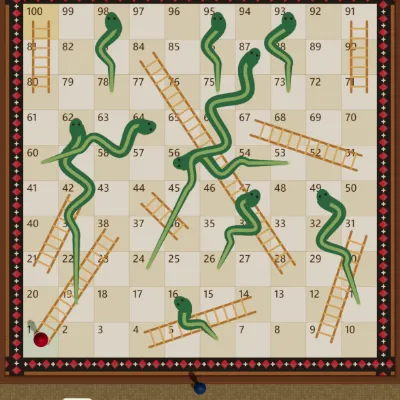 Snakes & LaddersOnce a board of virtues and vices. A Nepali cloth of the 1800s survives, and the dictionary remembers a game called Vaikunthe.
The games no phone can play
Most of what Nepali writing calls a dying game is played with the body: in a field, a lane or a courtyard. In 2022 Onlinekhabar counted seventeen and said many had disappeared in thirty years. In the 1970s, when Sharad Chandra Shah was member secretary of the National Sports Council, a committee collected local games from every part of the country, and its report was never acted on. In 2017 the cabinet named volleyball the national game, and the people who had believed it was dandi biyo found it never had been.
In Asar 2083 the first contest of traditional games was held in Kathmandu, with dandi biyo, Baghchal, ghaito phutai, stone throwing, tug of war and chess.
- डन्डीबियो (dandi biyo)
- A long stick flicks a short one, the biyo, out of a hole in the ground, and hits it as far as it will go. Its own association has been recognised by the National Sports Council since 2008.
- गुच्चा (guchcha)
- Marbles, flicked at a target marble or into a hole. The one on this list a phone might one day play, on carrom's physics.
- गट्टा (gatta)
- Five stones tossed and caught in a sequence of harder and harder throws, mostly a girls' game.
- चुङ्गी (chungi)
- A ball of rubber bands kept in the air with the side of the foot, counted kick by kick.
- भुरुङ (bhurung, lattu)
- A wooden top wound with string and thrown to spin, sometimes at another top.
- ढ्याक्की (dhyakki)
- Hopscotch, a flat stone kicked through squares drawn on the ground.
- कपर्दी (kapardi)
- Kabaddi: one raider holds a breath and a chant while touching the other side and getting home.
- घैँटो फुटाई (ghaito phutai)
- Breaking a clay pot hung overhead, with a stick, blindfolded.
- खोपी (khopi)
- Coins pitched into a small pit in the ground from a line.
- भाले जुधाई (bhale judhai)
- The cockfight without the cocks: two players hop on one leg, arms folded, and shove until one puts a foot down.
What about the card games?
Marriage, Call Break, Dhumbal, Kitti and Jutpatti are what most Nepali families play at a festival now, and they are on this site. They have no pages here because none of them has a written past to set out: they came with the printed pack, and nobody recorded when. The one card game with a history in Nepal is the round painted ganjifa. Percy Brown saw it at Tihar in 1912 and wrote that it was already dying out. Nobody is known to play it now.
Sources
Every fact above comes from one of these. Where a page could only be read in a search summary, or a claim has no source at all, the text says so.
- With no inter-generational transformation, Nepal's traditional local games are dying, Sudarshan Aryal and Govinda Raj Nepal, Onlinekhabar, 6 March 2022
- Call for preservation and promotion of indigenous sports of Nepal, RSS, Khabarhub, 5 August 2022
- Childhood games in Nepal, Benazir Ahmed Siddique, The Himalayan Times, 31 August 2021
- Old-school games to take you down memory lane, Arjun Bhattarai, The Kathmandu Post, 21 November 2019
- Nepal's 'national sport' we never had: Five things you didn't know about dandi-biyo, Onlinekhabar, 17 March 2016
- Volleyball declared national game, The Himalayan Times, 24 May 2017
- रिसनलाई चेस तथा जेन्जीलाई टग अफ वारको उपाधि, Gorkhapatra, 13 Asar 2083 (in Nepali)
- Picturesque Nepal, Percy Brown, 1912, pages 192 to 195